

Commuter rail was first identified as the preferred transit technology for the Red Rock Corridor more than a decade ago. New conditions along the corridor, and new options for providing service prompted a reexamination of transit alternatives for service along the corridor. The Red Rock Corridor Alternatives Analysis Update (AAU) sought to evaluate alternatives based on a variety of factors, including cost, potential ridership, and satisfaction of riders' needs and vision.
Recent work
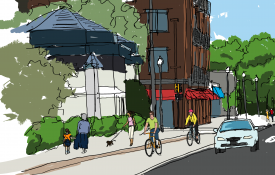
The city of Hopkins, Minnesota first developed as a small town and is now a fully-developed second-ring suburb of Minneapolis. Anchored by a strong and vibrant downtown, the city retains an urban framework that provides a solid foundation for pedestrian and bicycle mobility.
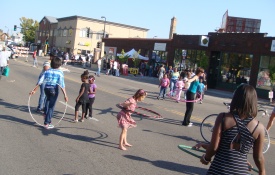
CDG managed and coordinated the successful implementation of all four Open Streets events held in Minneapolis in 2013.
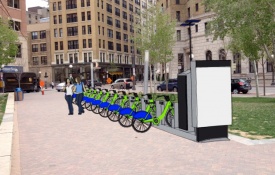
CDG led system planning, design, evaluation and community engagement efforts for Nice Ride Minnesota, the Twin Cities bikeshare system, since fall of 2010, its first year of deployment until its acquisition and subsequent closing by Lyft in 2020.
CDG’s broad, inclusive and user-friendly planning and design process facilitated implementation, engaged Twin Cities residents and institutions in the shaping of the system, and made possible Nice Ride’s successful and sustainable expansion.
CDG’s tasks have included:
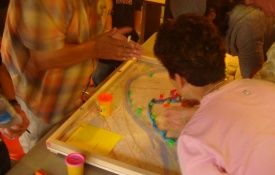
In spring of 2011, the West Side Community Organization (WSCO) began a process to develop a new Community Plan for District 3. Discovering and developing the vision that would guide the policies included in the Plan was the first step in this process.
Community Design Group was hired to design and implement a visioning process to:
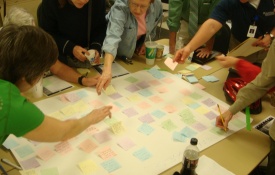
The Minnesota Department of Transportation (MnDOT) conducted a study to reexamine all of its bicycle-related policies and practices with the aim of better integrating bikeway facility planning and implementation into its day-to-day business.
Community engagement (conducted statewide) was an important part of this project as members of the public have insights and experiences that can help MnDOT become a more proactive partner in improving conditions for bicycling throughout the state.
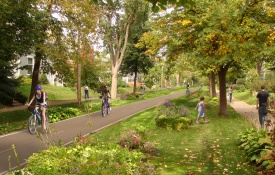
How do you find out if homeowners and neighborhood residents are amenable to turning their street into a linear park?
The short answer is: you ask them. Working with TLC / Bike Walk Twin Cities, we convened and facilitated community conversations around the possibility of converting some residential streets in North Minneapolis - one of the most ethnically, culturally and economically diverse communities in Minnesota - into a Greenway for pedestrians and cyclists.
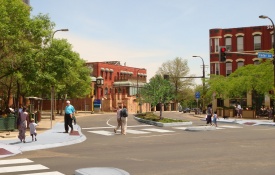
Community Design Group provided bicycle and pedestrian planning, community engagement, and technical assistance services to Twin Cities Metro-area jurisdictions as part of the $25 million Federal Non-motorized Transportation Pilot (NTP) grant administered by Transit for Livable Communities (TLC) and Bike Walk Twin Cities.
Improving cyclist and pedestrian safety, access and connections was a prominent goal of this work, as was supporting TLC's and Bike Walk Twin Cities' goals for inclusive and engaging public processes.

Edina's GrandView District is one of the largest redevelopment sites within the city's boundaries, and is also an historically-important commercial and civic location. Many changes in the District’s land uses prompted the initiation of a community-led process to plan for its future - in consultation with residents, property owners, business owners and commercial property owners, to produce a guide for redevelopment.

Minneapolis is known as one of the most bicycle-friendly cities in the nation - but there is still a lot more to do to invite new users from all Twin Cities communities to the system.
As part of the rollout of new bicycle infrastructure projects in locations throughout the Twin Cities, Transit for Livable Communities and Bike Walk Twin Cities funded a communications and marketing project to engage and invite new users to these facilities.